Restoration Guide
How Much Does Water Damage Restoration Cost in Sahuarita, AZ?
By Water Damage Restoration Sahuarita · 2026-10-21 · Sahuarita, AZ
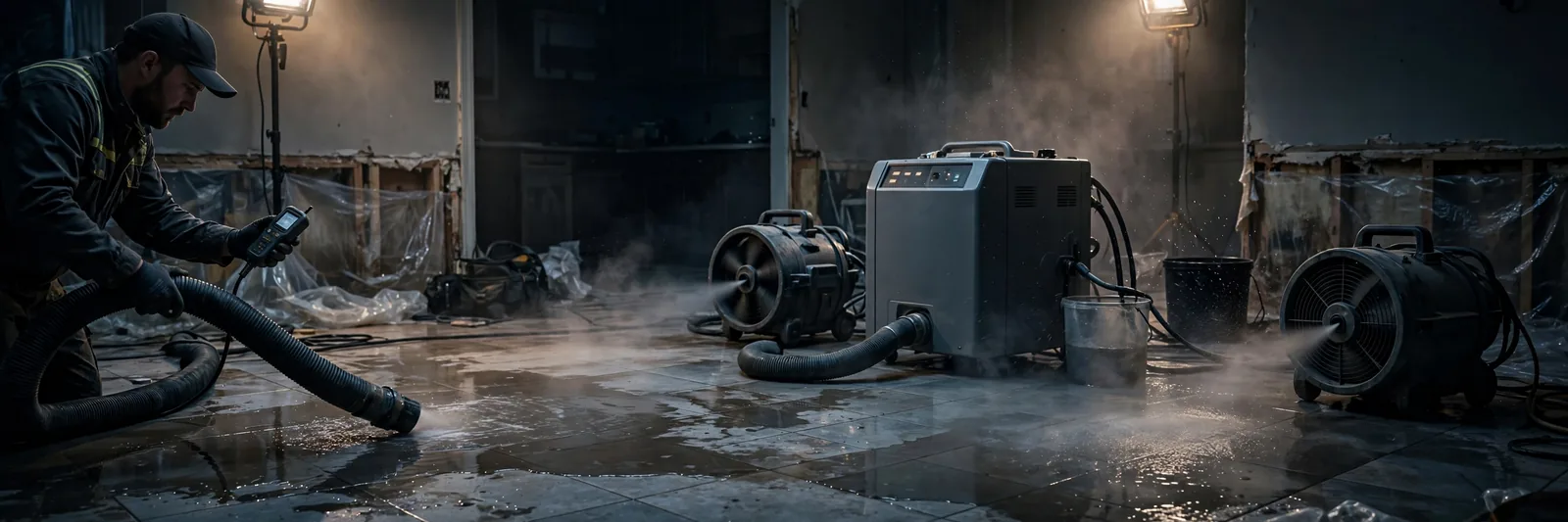
The honest answer to "how much does water damage restoration cost" is that it depends entirely on what the water did, not just that it happened. A supply-line leak caught in an hour on tile is a fundamentally different job than a sewage backup that soaked drywall in three rooms, different category, different equipment, different demolition, different rebuild. This 2026 guide breaks down the actual cost drivers so you can understand any estimate you receive. Updated for 2026.
We never quote prices over the phone, and you should be skeptical of anyone who does. What follows is not a price list, it is the framework professionals and insurance adjusters use to build one. Once you understand the drivers, you can read an itemized estimate the way the pros do and spot what's missing. For the service side, see our water damage restoration in Sahuarita.
Why Nobody Reputable Quotes Over the Phone
Water damage pricing has more variables than almost any other home service, and they interact. The water's category determines whether materials are dried or demolished. The square footage determines equipment count and labor days. The materials, drywall versus tile, carpet versus slab, determine how much tear-out is needed. Contents and pack-out add a separate workstream. The rebuild scope determines whether you're paying for drying alone or for a small construction project afterward. Any one of these can double or halve the job.
That is why a phone quote is a guess dressed as a price. A professional estimate starts with moisture mapping, meters and infrared cameras showing exactly where water traveled, and ends with a written, itemized scope you can hand to your adjuster. If a contractor quotes before measuring, they're quoting a different job than the one in your house.
The Six Cost Drivers, Explained
Every estimate in this industry is built from the same six inputs. Understanding them lets you read any quote critically and ask the questions that reveal whether a contractor actually scoped your loss:
The first three drivers decide the mitigation phase; the last three decide the restoration phase. A job can be cheap on one end and expensive on the other, a small Category 3 loss, for example, has modest extraction costs but heavy demolition and rebuild costs.
| Cost driver | Why it moves the price |
|---|---|
| Water category (1/2/3) | Category 2/3 requires demolition of porous materials, disinfection, and PPE protocols, far more labor than drying clean water in place |
| Square footage affected | More area means more equipment, more labor days, and more materials to replace |
| Materials involved | Drywall and carpet pad are removed; tile and concrete are dried, material mix sets the tear-out scope |
| Contents / pack-out | Furniture and belongings must be moved, cleaned, stored, and returned, a separate workstream |
| Rebuild scope | Drywall, insulation, flooring, paint, and trim replacement turns a drying job into a construction project |
| Access and timing | Night/weekend emergency response, tight crawlspaces, and multi-story drying all add labor complexity |
The Arizona Factor: How Local Homes Change the Math
Sahuarita homes change the cost equation in ways out-of-state pricing guides miss. Most local homes sit on slab-on-grade foundations, no basements to flood, but water spreads horizontally across the slab and wicks up into drywall across a wider area. Tile and stained concrete floors are usually dried and saved rather than replaced, but carpet pad, where it exists, is always removed.
Stucco exteriors and tile roofs handle desert sun well but create their own vulnerabilities: monsoon-driven rain forces water through window flashing, roof penetrations, and parapet walls, and flat or low-slope roof sections pond water during heavy storms. And the heat compresses every timeline, a loss that sits over a Sahuarita weekend in August degrades in category faster than the same loss in a cooler climate, which is why emergency response speed is itself a cost control.
- Slab-on-grade construction, no basements, so water spreads horizontally across the slab
- Tile and concrete floors, dried and saved in most cases, unlike carpet pad
- Stucco exteriors, monsoon-driven rain finds window and roof penetrations
- Flat or low-slope roof sections, ponding water during monsoon storms
The Deductible: How It Comes Off Your Claim
The most misunderstood number in water damage is the deductible. It comes off the top of the covered claim amount, if your covered loss is assessed at a given figure and your deductible is your policy's stated amount, the insurer pays the difference and you pay the deductible, regardless of who does the work. It is not negotiable, and no contractor can waive it for you without committing insurance fraud.
This creates a practical decision rule: if the total cost of professional mitigation is near or below your deductible, filing a claim gains you nothing and puts a claim on your record. Many Arizona homeowners carry higher deductibles to keep premiums down, which means smaller losses are routinely handled out of pocket. A good contractor will tell you this plainly before you file, the claim decision should follow the numbers, not precede them.
Mitigation vs. Rebuild: Where the Money Actually Goes
Roughly speaking, mitigation is the smaller invoice and rebuild is the larger one, but the ratio flips with category. A Category 1 loss on tile might be mostly mitigation: extraction, a few days of drying equipment, verification. The rebuild is minimal. A Category 3 loss reverses it: the mitigation is fast (remove and discard), but the rebuild, new drywall, insulation, flooring, paint, possibly cabinets, is where the real money goes.
This split is also why "drying-only" quotes can be misleading. A contractor who prices only the drying phase looks cheaper than one who scopes drying plus the necessary rebuild, until you discover the rebuild was always required and now you're paying a second mobilization. Always ask whether an estimate covers mitigation only or mitigation plus restoration to pre-loss condition. The itemized scope should make this unambiguous.
Drying-Day Economics: Why Speed Saves Money Twice
Every extra day water sits in a structure costs money twice: once in equipment and labor to dry a wetter, more contaminated loss, and once in the expanding scope as water wicks further and the category degrades. A loss mitigated the same day it happens is a drying job; the same loss discovered after a weekend away can be a demolition job. In Sahuarita's heat, that escalation happens faster than most homeowners expect, the 24–48 hour mold window is real, and mold adds a mold remediation scope on top of the water scope.
The practical takeaway: the cheapest water damage job is the one that starts fastest. Shut off the source, call for emergency assessment, and let the moisture mapping decide the scope. Speed doesn't just reduce damage, it keeps the job in the cheaper category with the smaller rebuild.
Frequently Asked Questions
Why do two companies give such different prices for the same water damage?
Is water damage restoration covered by homeowners insurance?
Does the water category really change the cost that much?
Do I pay my deductible even if insurance covers the restoration?
Can I save money by drying it myself with fans?
Fire or smoke damage in Sahuarita?
Talk to a local restoration crew today, 24/7 emergency line.
24/7 emergency line, we answer around the clock.