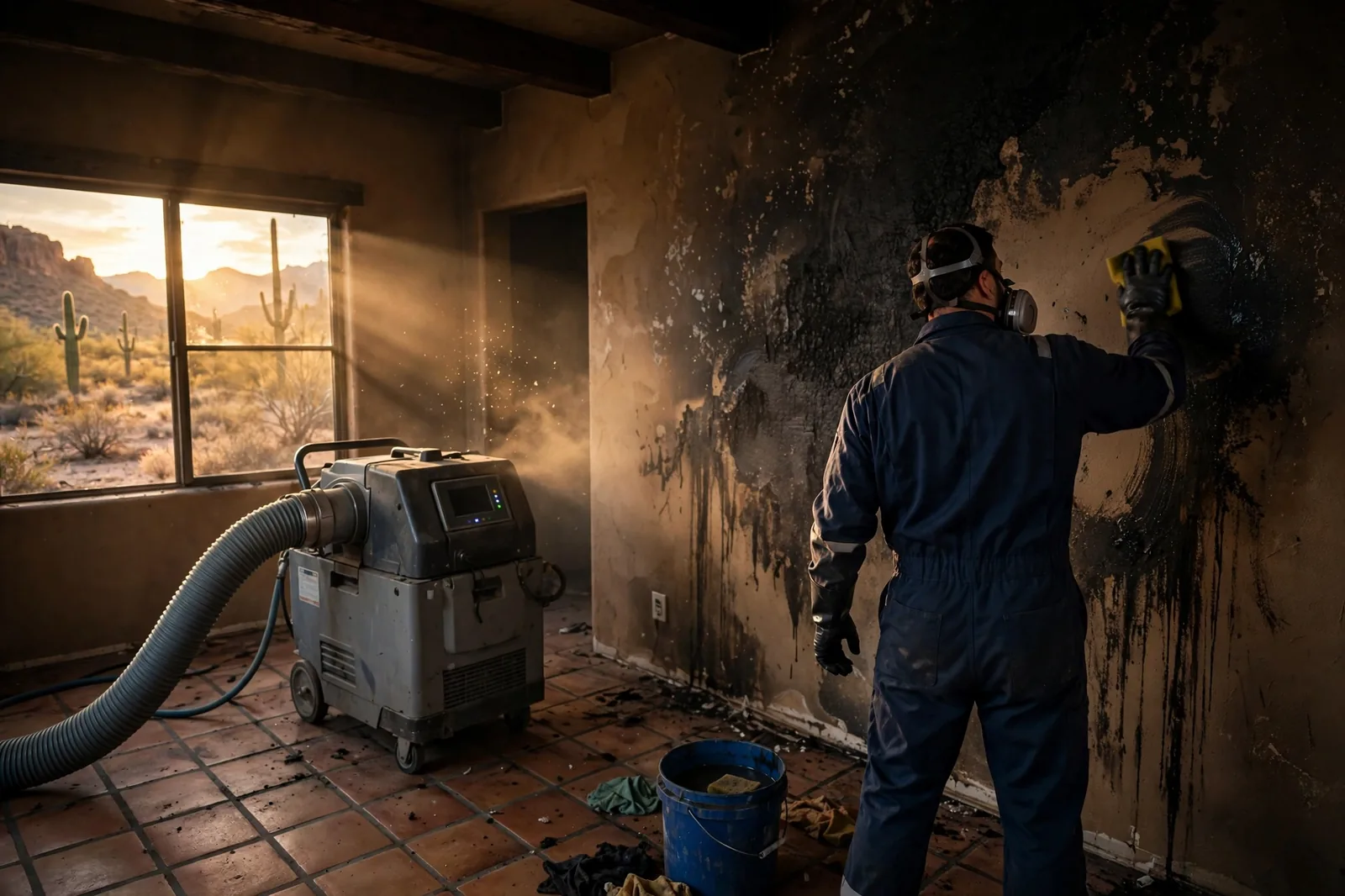
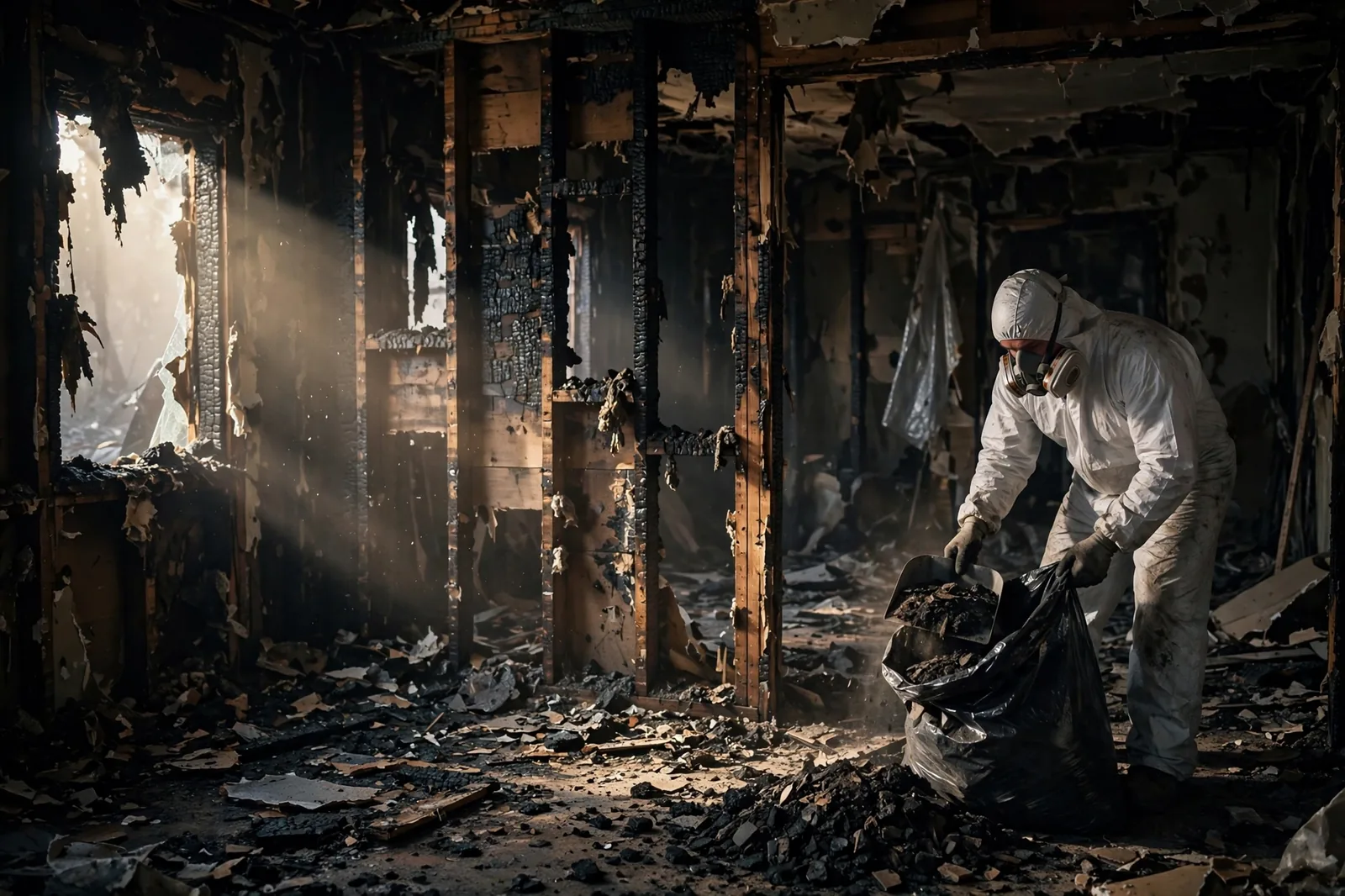
Fire Damage Removal
Complete fire restoration: debris removal, structural cleaning, repairs, and rebuild coordination.
Explore Fire Damage RemovalA fire in a newer Madera Highlands home follows a different script than in older construction. Open-concept floor plans let smoke cross the entire main level in minutes. MDF trim, engineered flooring, and spray-foam insulation absorb odor and moisture in ways solid wood and fiberglass don't. And because these homes are tight, sealed attics, efficient envelopes, smoke that gets in has a harder time getting out. Restoration here isn't about tearing out more; it's about testing first and targeting exactly what the fire touched.
Our Sahuarita-area crew knows Meritage-era construction and the builders who followed. We map damage with moisture meters and infrared cameras before writing a scope, clean what's restorable to the IICRC S700 standard, and replace only what testing proves can't be saved. One point of contact runs your job from the first 24/7 call through the final walkthrough, with photo documentation your adjuster can price. Call +1 844-969-2789 any time, nights, weekends, holidays.
Madera Highlands sits on Sahuarita's south side, where the tract neighborhoods give way to open desert, and that edge defines the risk profile. Monsoon rains from mid-June through September grow thick grasses across the rangeland that cure into wildfire fuel by fall; in 2024, Tucson Fire answered 878 brush fires across the region. Even when flames stay far away, smoke drift pushes fine, acidic soot through attic vents and HVAC intakes, etching glass and corroding metals in homes the fire never touched.
Closer to home, the usual suspects apply with a new-construction twist. Garages here run heavy electrical loads, EV chargers, second freezers, workshop tools, in spaces that bake past 110 degrees all summer. Ongoing construction nearby means hot work and exposed framing within sight of finished homes. And the open floor plans buyers love become smoke highways during a kitchen fire: no walls to slow it, no doors to close, just one continuous path from the stove to every bedroom.
Because we restore the house that's actually there. Meritage-era and newer tract homes use materials that behave differently under fire conditions: MDF trim swells and holds odor where solid wood would clean up; luxury vinyl plank traps water underneath it; spray-foam attics seal smoke in instead of venting it. A crew that treats every home like a 1990s build will either tear out too much or clean too little. We test surfaces and cavities first, moisture meters, infrared cameras, soot-type testing, and scope the work to the evidence.
That discipline pays off twice: it keeps restorable materials in place, and it gives your adjuster an itemized, defensible scope instead of a vague lump sum. You get one point of contact, photo documentation at every stage, and straight answers about what can be saved. New-build owners also appreciate that we coordinate cleanly with builder warranty questions, separating what's a defect issue from what's an insurance claim, so nothing falls through the cracks.
Every job runs the same disciplined sequence. Secure first: board-up, roof tarping, water extraction, usually the same day you call. Then assessment with meters and cameras, mapping smoke, soot, and moisture through open floor plans, both stories, and the attic. Mitigation follows the IICRC S700 fire and smoke standard: debris and char removal, HEPA vacuuming, soda blasting where appropriate, structural drying with LGR dehumidifiers and air movers, and odor neutralization at the source. Rebuild comes last, coordinated by our team.
Three modern details change the playbook. First, spray-foam attics: the foam seals the thermal envelope beautifully, but smoke that enters through vents or chases saturates the foam and adjacent framing with nowhere to dissipate. Cleaning the surface isn't enough, saturated sections come out, and we verify with inspection rather than assumption. Second, open floor plans: smoke doesn't respect the great-room/kitchen boundary because there isn't one, so scoping has to cover the full main level, not just the room of origin.
Third, engineered finishes. MDF baseboards and window trim absorb water and odor like a sponge; LVP flooring hides water underneath while looking fine on top; low-VOC paints can be harder to clean than older formulations. None of this means newer homes are worse off, undamaged modern materials often clean up beautifully. It means the crew has to know the materials, test them, and choose chemistry per surface instead of running one process on the whole house.
Firefighters use a lot of water, and in a tight new build it goes everywhere the smoke went, under LVP, into wall bases, through ceiling penetrations to the floor below. Slab foundations don't absorb it; they hold it against flooring and framing. In Sahuarita heat, that trapped moisture starts growing mold inside 24–48 hours, which is why extraction and dehumidification start on day one, not after the smoke work.
We map moisture with meters and infrared cameras, pull strategic flooring sections to check what's underneath, and dry the structure with LGR dehumidifiers and directed air movers, verifying with readings, not calendars. Monsoon season raises the stakes: a tarped roof in July faces sideways rain, so our emergency securing is built to survive the next storm cell, not just the night.
Here's what to expect. Days 1–2: emergency response, securing, water extraction, and initial assessment. Days 3–7: full documentation, adjuster coordination, and the itemized scope, while mitigation (debris removal, HEPA cleaning, drying) gets underway. Weeks 2–4: deep cleaning, odor treatment, and contents pack-out return; this is where most smoke-only jobs finish. If rebuild work is needed, drywall, flooring, paint, trim, add weeks to months depending on scope and material lead times.
Two things compress the timeline: fast decisions and complete documentation. We give you both, daily updates, photo records, and a scope your adjuster can approve without back-and-forth. If the home is uninhabitable, we track everything for your ALE claim from day one, so temporary housing costs stay documented and reimbursable.
Madera Highlands is a newer tract neighborhood of single- and two-story stucco homes off Old Nogales Hwy near Duval Mine Rd. Two-story homes add a pattern single-level homes do not have: an upstairs bathroom or laundry leak drips into the ceiling and walls below, and the cavity between floors hides water long after the surface looks dry.
Smoke behaves differently here too. Heat and smoke rise, so an upstairs fire affects the upper floor hardest, while a downstairs fire pushes smoke up the stairwell into every bedroom.
One local crew for the full chain, from emergency board-up on night one to the final walkthrough.
Complete fire restoration: debris removal, structural cleaning, repairs, and rebuild coordination.
Explore Fire Damage Removal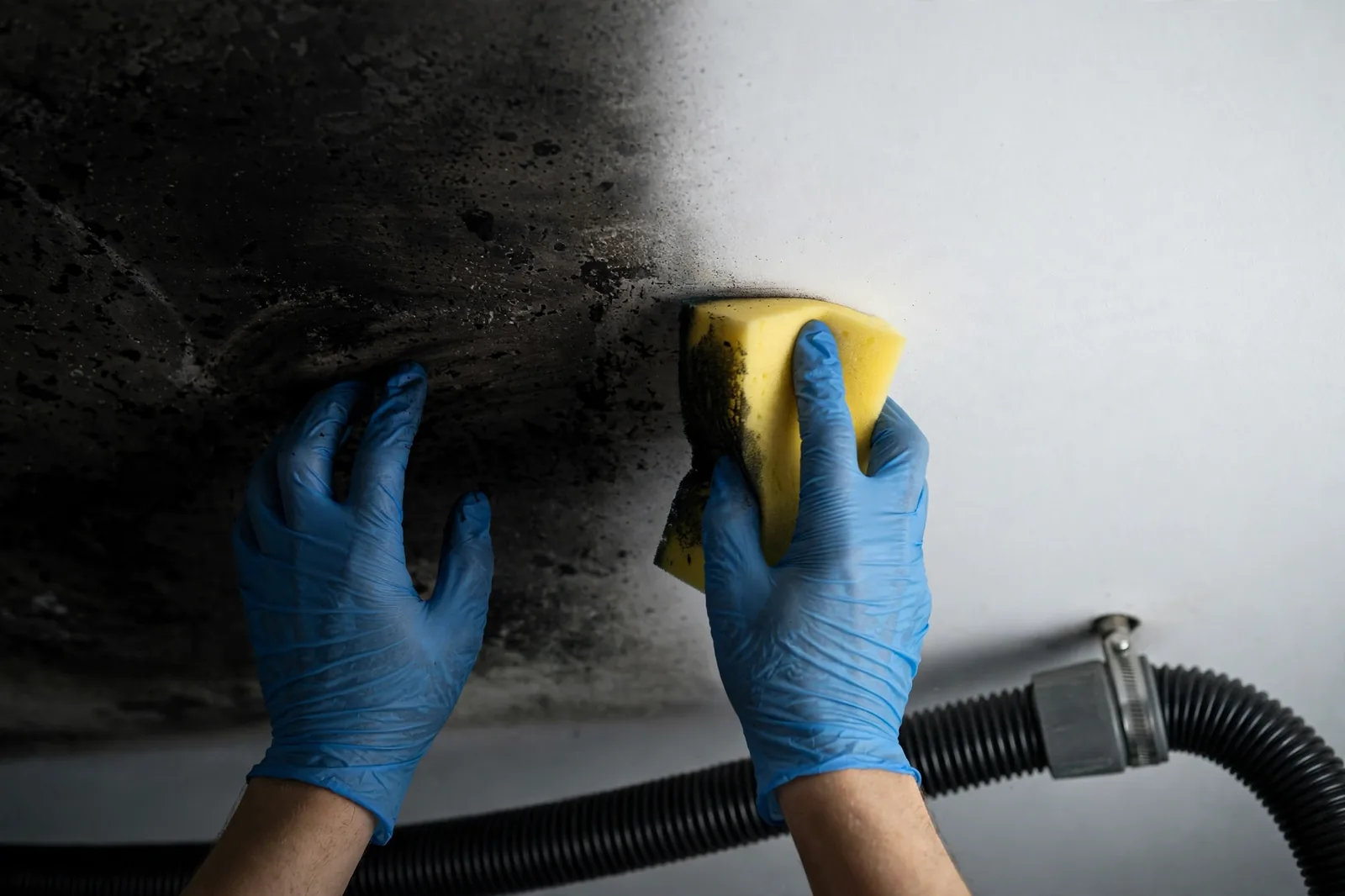
Corrosive soot removal from walls, ceilings, contents, and HVAC-affected areas.
Explore Smoke & Soot Cleanup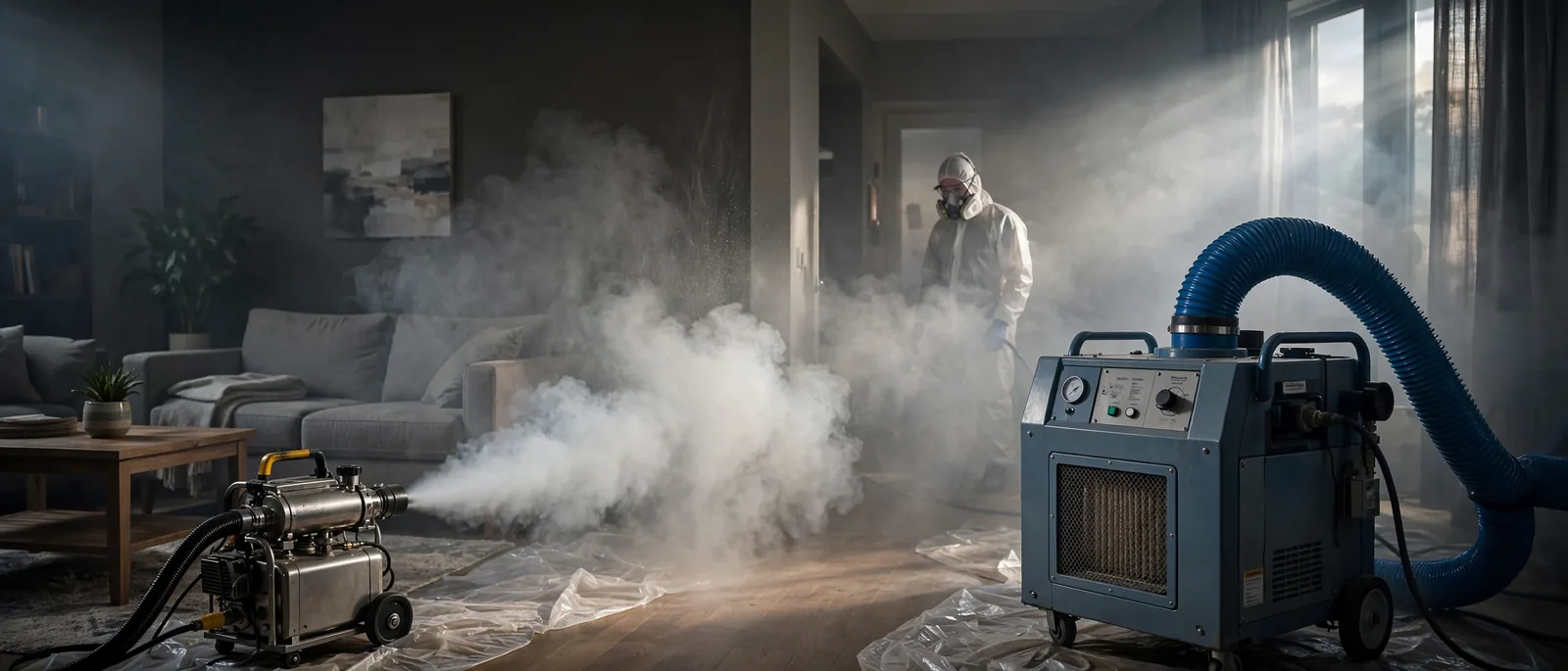
Odor neutralized at the source, thermal fogging, hydroxyl, and deep cleaning.
Explore Smoke Odor Removal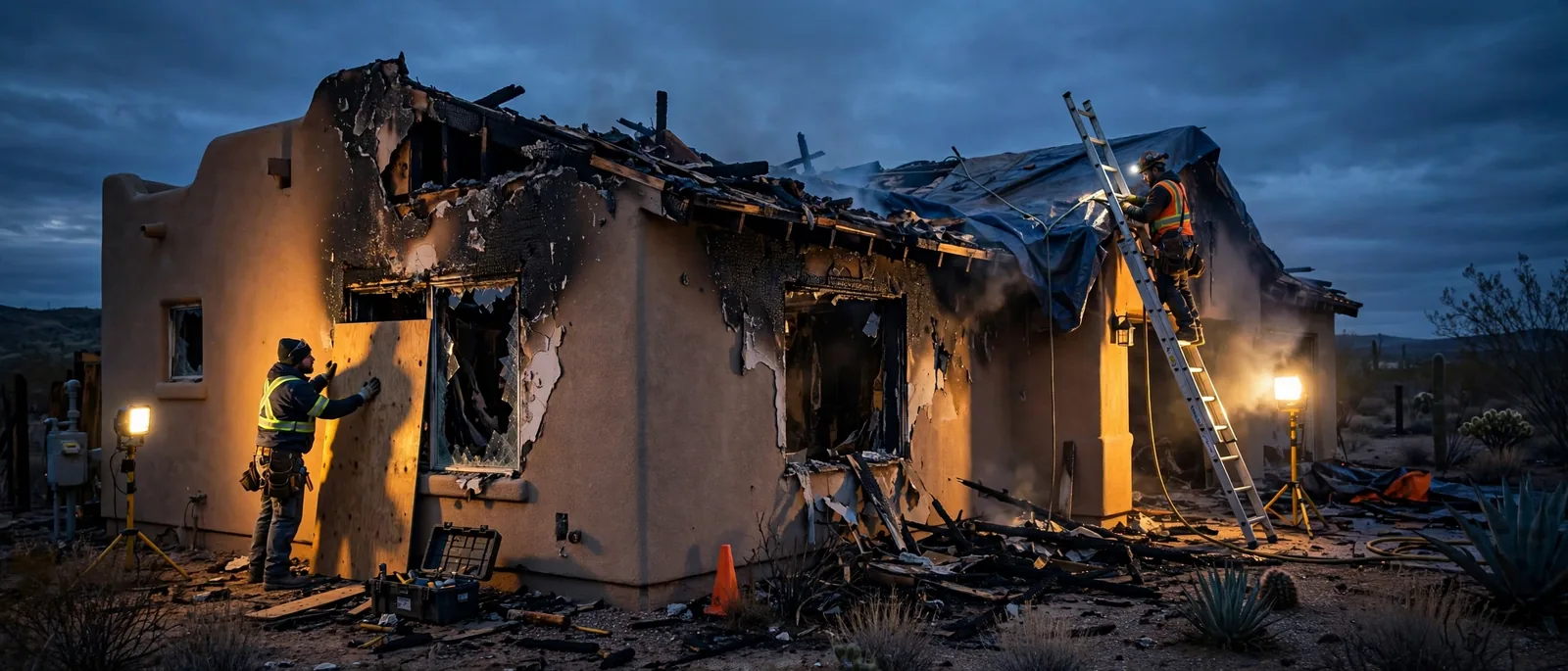
Fast securing of windows, doors, and damaged roofs after fire or storm.
Explore Emergency Board-Up & Tarping
How board-up pricing works in Sahuarita, AZ: what drives the cost and what's included.
Explore Emergency Board-Up Cost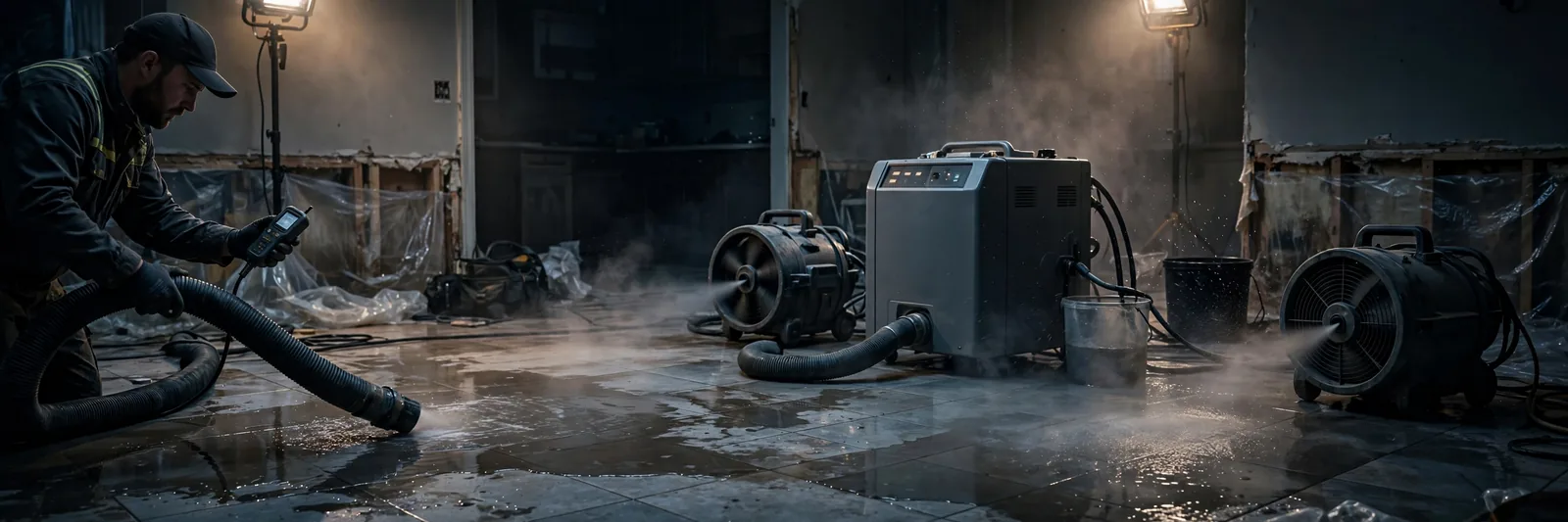
Extraction, structural drying, and moisture control after firefighting or monsoon water.
Explore Water Damage Restoration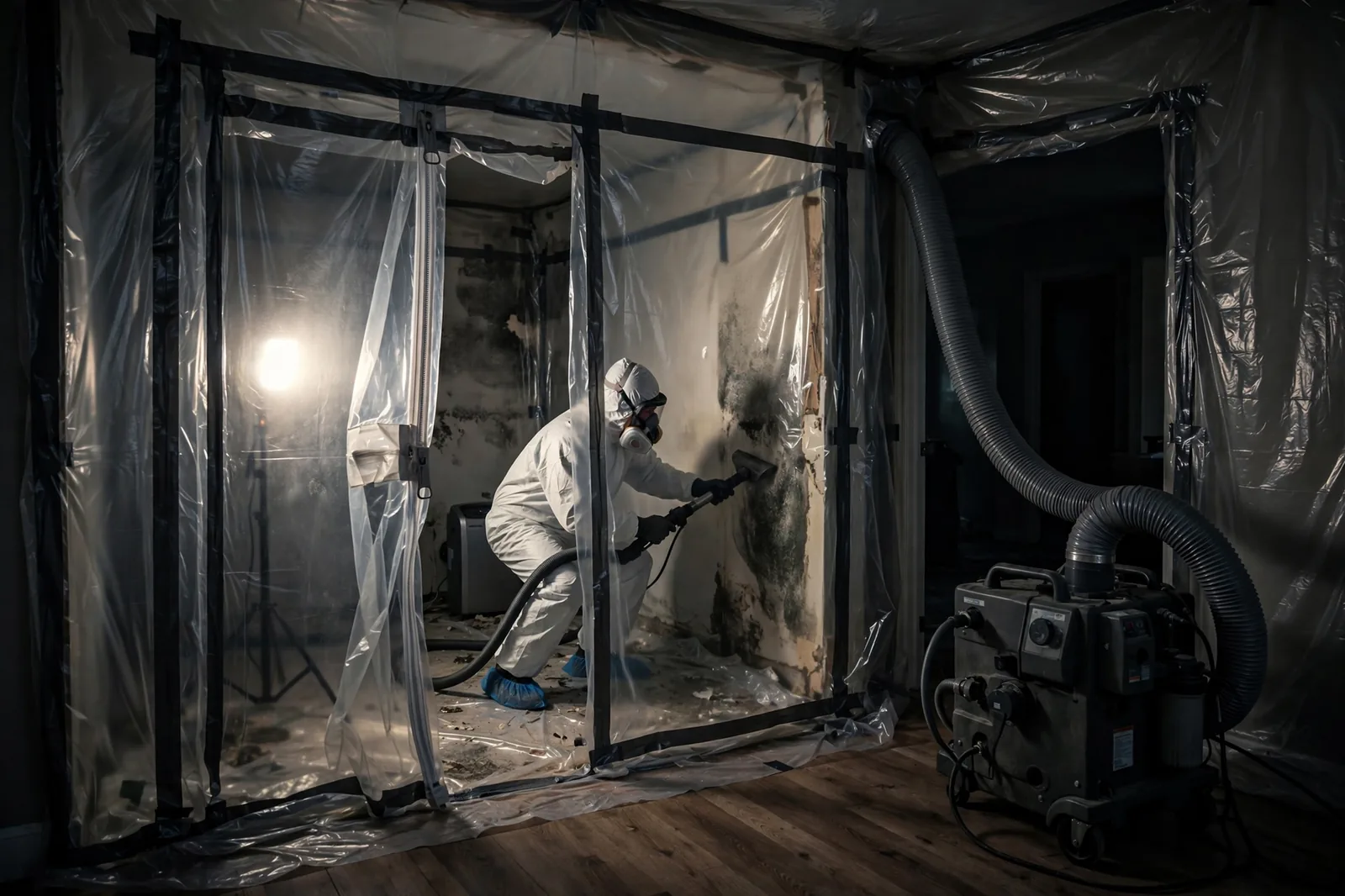
Containment and proper removal of mold after moisture intrusion in Arizona heat.
Explore Mold RemediationThe same proven process, tuned to your neighborhood.
Emergency Response & Securing
Call +1 844-969-2789 any hour, the south side of Sahuarita is fully in our response area. We board up windows and doors, tarp roof damage, and extract standing water, usually the same day. Night-one goal: stabilize the home against weather and intrusion.
Assessment & Documentation
Moisture meters and infrared cameras map smoke, soot, and water through open floor plans, both stories, attics, and wall cavities. We photograph everything, test soot types, and build an itemized scope, documentation your adjuster can price without guesswork, confidently. Fully documented.
Mitigation: Clean, Dry, Deodorize
Debris and char removal first, then HEPA vacuuming, soda blasting, and structural cleaning per IICRC S700. LGR dehumidifiers and air movers dry the structure; odor is neutralized at the source with thermal fogging or hydroxyl treatment. Salvageable contents go to off-site pack-out cleaning.
Repairs, Rebuild & Walkthrough
Drywall, flooring, paint, and trim go back in with rebuild coordination handled by our team. We finish with a room-by-room walkthrough with you before sign-off, and if you can still smell smoke where we treated, we re-treat it.
Based around Sahuarita, AZ 85629, in Pima County near the Santa Rita Mountains.
Fire & smoke restoration for homes and businesses in Rancho Sahuarita, AZ.
Rancho Sahuarita restorationFire & smoke restoration for homes and businesses in Quail Creek, AZ.
Quail Creek restorationFire & smoke restoration for homes and businesses in Madera Highlands, AZ.
Madera Highlands restorationFire & smoke restoration for homes and businesses in Santa Rita Villas, AZ.
Santa Rita Villas restorationFire & smoke restoration for homes and businesses in Los Arroyos, AZ.
Los Arroyos restorationFire & smoke restoration for homes and businesses in Valle Verde del Norte, AZ.
Valle Verde del Norte restorationFire & smoke restoration for homes and businesses in Madera Reserve, AZ.
Madera Reserve restorationFire & smoke restoration for homes and businesses in Green Valley, AZ.
Green Valley restorationNew builds need restoration matched to modern construction, not a one-size-fits-all tear-out. Call +1 844-969-2789 now for emergency board-up, smoke and water mapping, and an honest, itemized plan.
24/7 emergency line, we answer around the clock.