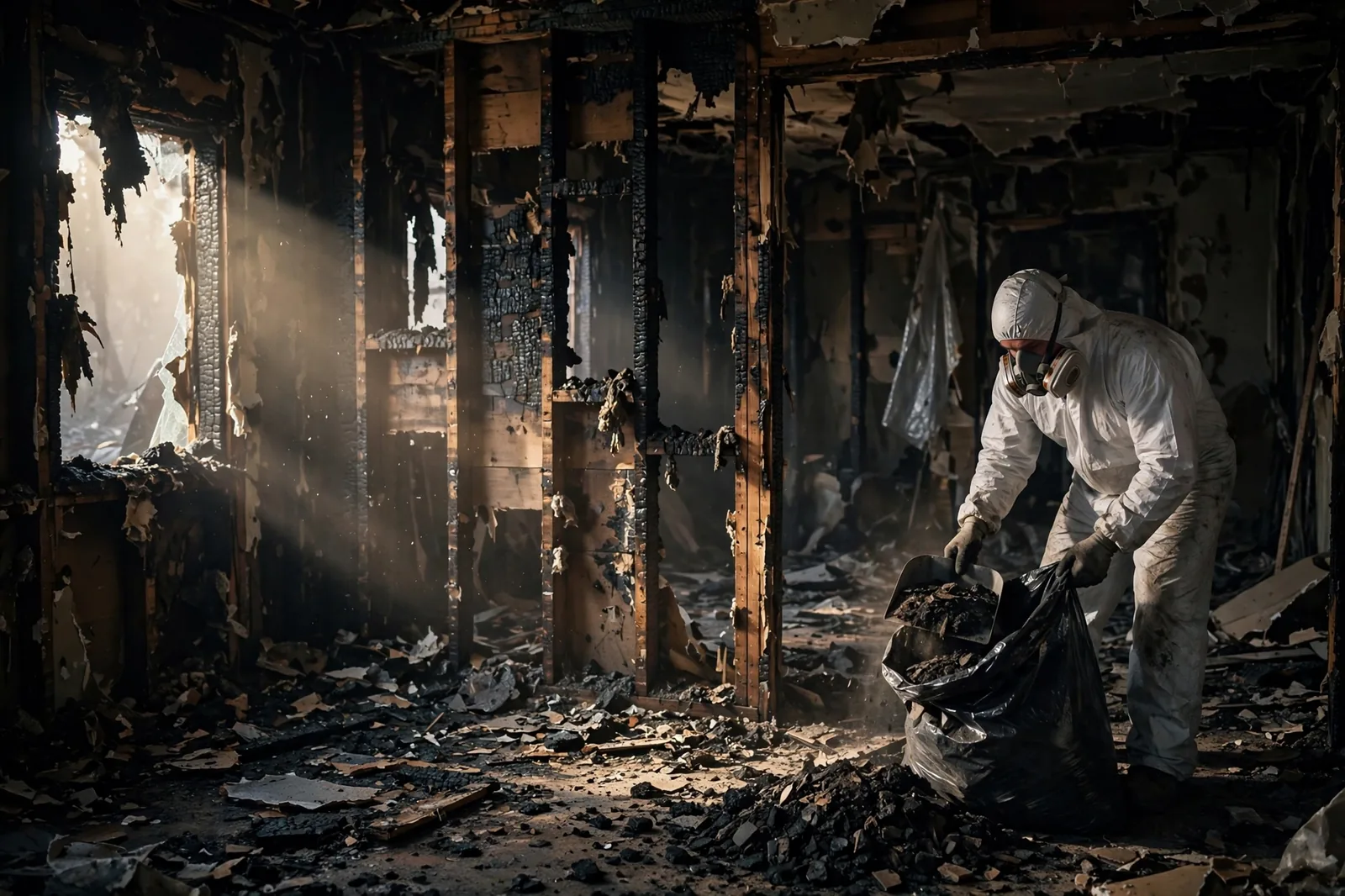
Fire Damage Removal
Complete fire restoration: debris removal, structural cleaning, repairs, and rebuild coordination.
Explore Fire Damage RemovalWater damage in Sahuarita comes from three directions: the hundreds of gallons firefighters use on a house fire, monsoon-season roof leaks and flash flooding, and burst pipes or appliance failures that run unnoticed. Different sources, same physics, water wicks up drywall, hides in wall cavities, and soaks subfloors and insulation long after the visible puddle is gone. What you see is always less than what's there, which is why water jobs are mapped, not eyeballed.
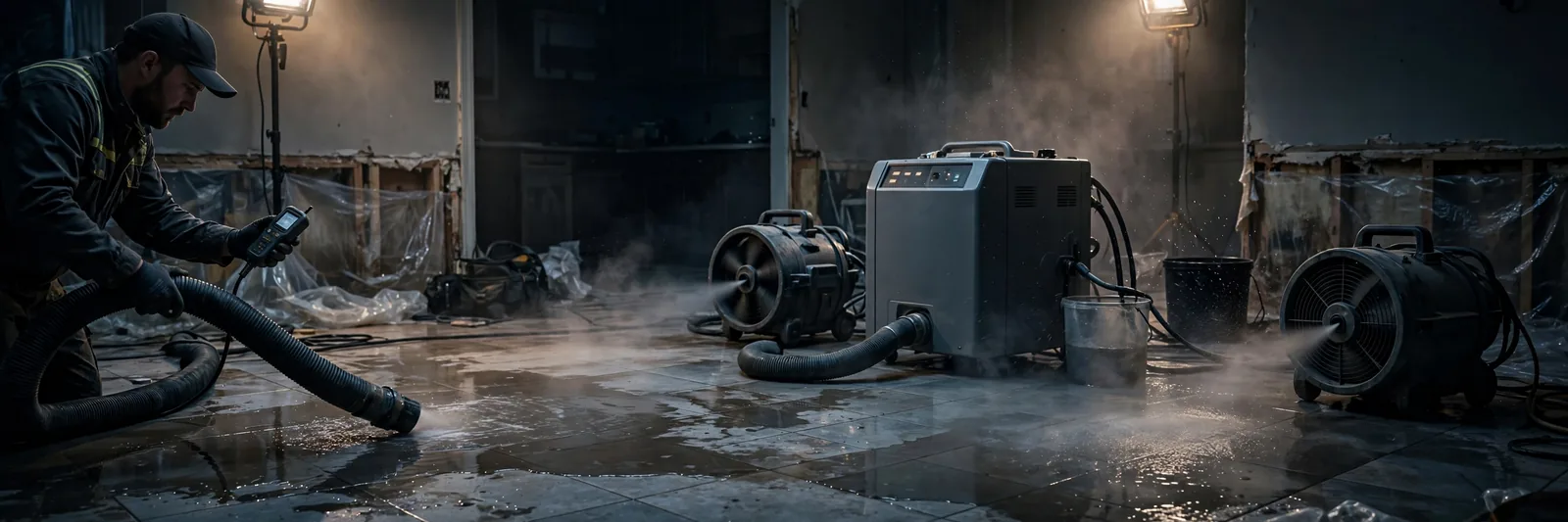
Our water damage restoration starts with extraction, truck-mounted and portable units pulling standing water out fast, then moisture mapping with meters and infrared cameras to find everywhere water traveled. We place LGR dehumidifiers and air movers in a calculated drying setup, take daily readings, and don't pull equipment until materials verify dry. When water came from firefighting, this work runs alongside our full fire restoration; when it sat too long, we coordinate mold remediation before rebuild.
In the Tucson metro's southern corridor, water damage has a seasonal signature. Monsoon season, mid-June through September, brings roof leaks from wind-driven rain, flash flooding that finds every low entry point, and lightning-related incidents. Year-round, burst supply lines and failed water heaters do their damage quietly, often running for hours while nobody's home. And after any house fire, firefighting water saturates carpet, padding, drywall, and subfloors, hundreds of gallons that have to be dealt with alongside the fire damage itself. Each source carries different contamination risk: a burst supply line is clean water, while floodwater and sewage backups are not, and the water category changes the entire restoration protocol.
Professional drying is engineered, not improvised. First we extract, standing water removed with truck-mounted and portable units, because no dehumidifier keeps up with water that's still sitting there. Then moisture mapping: meters and infrared cameras show exactly where water traveled behind walls and under floors, including areas that look and feel dry. Then the drying setup: LGR (low-grain refrigerant) dehumidifiers pull moisture from the air at levels conventional units can't reach, while air movers create the airflow that drives evaporation from wet materials. We take daily readings and don't remove equipment until materials verify dry against established standards. A fan dries the surface and traps moisture inside the wall, which is what grows mold and rots framing.
In cooler climates, you might have a few days before wet materials become a mold problem. In Sahuarita, you don't. Warm, wet drywall, carpet pad, and insulation inside a closed-up home are ideal conditions for mold colonization, and Arizona's extreme heat accelerates the timeline to as little as 24-48 hours after water intrusion. Monsoon season compounds it: ambient humidity is highest exactly when roof leaks and flash flooding are most likely. That's why our 24/7 line exists for water calls, starting tonight versus next week is often the difference between a dry-out and a full mold remediation.
Honest answer: not everything can be saved. Sealed surfaces, solid wood, and concrete usually dry well with professional equipment. But carpet padding acts like a sponge and almost always goes. Insulation that absorbed water loses its R-value and becomes a mold risk, it comes out. Drywall that wicked water up from the floor can sometimes be dried if caught fast, but drywall that sat wet for days or absorbed contaminated water gets cut out and replaced. Our moisture mapping shows you exactly which materials read wet and which don't, and the remove-versus-dry decision follows the readings and the water category, not a one-size rule. We'd rather replace drywall now than chase mold behind paint in three months.
An upstairs bathroom, laundry, or supply-line leak shows up downstairs as a ceiling stain, a sag, a drip, or a soft spot. The ceiling is the symptom. The leak above is the problem, and the cavity between them is already wet.
If the ceiling is sagging, bulging, or a hole is forming, keep people out from under it. A waterlogged ceiling can fail without warning.
A backed-up drain or toilet overflow is not a mop-and-bucket job. Sewage is Category 3 water: it carries bacteria and contaminants that require containment, protective equipment, disinfection, and removal of affected porous materials.
We handle sewage backup cleanup as part of water damage restoration, with the same documentation your insurer needs. Keep people and pets out of the affected area, do not run fans that spread contamination, and call the emergency line.
How we handle water damage restoration in Sahuarita, AZ, documented at every step.
Emergency extraction, day or night
Call +1 844-969-2789 any time. We arrive with extraction equipment, stop the source if it's still active (or guide you to), and pull standing water out fast, the single most important step, and the one that can't wait.
Moisture mapping and water categorization
We map every wet area with moisture meters and infrared cameras, behind walls, under floors, inside cavities, and identify the water category, which sets the safety and cleaning protocol for the whole job.
Engineered structural drying
LGR dehumidifiers and air movers go in as a calculated drying system, not a fan in the corner. We take daily moisture readings and adjust the setup until materials verify dry against established standards.
Verification, documentation, and next steps
We verify dryness room by room with readings you can see, treat where contamination risk warrants it, and hand you documentation for your insurance claim. If mold is found during the job, we contain and remediate it before any rebuild starts.
One local crew for the full chain, from emergency board-up on night one to the final walkthrough.
Complete fire restoration: debris removal, structural cleaning, repairs, and rebuild coordination.
Explore Fire Damage Removal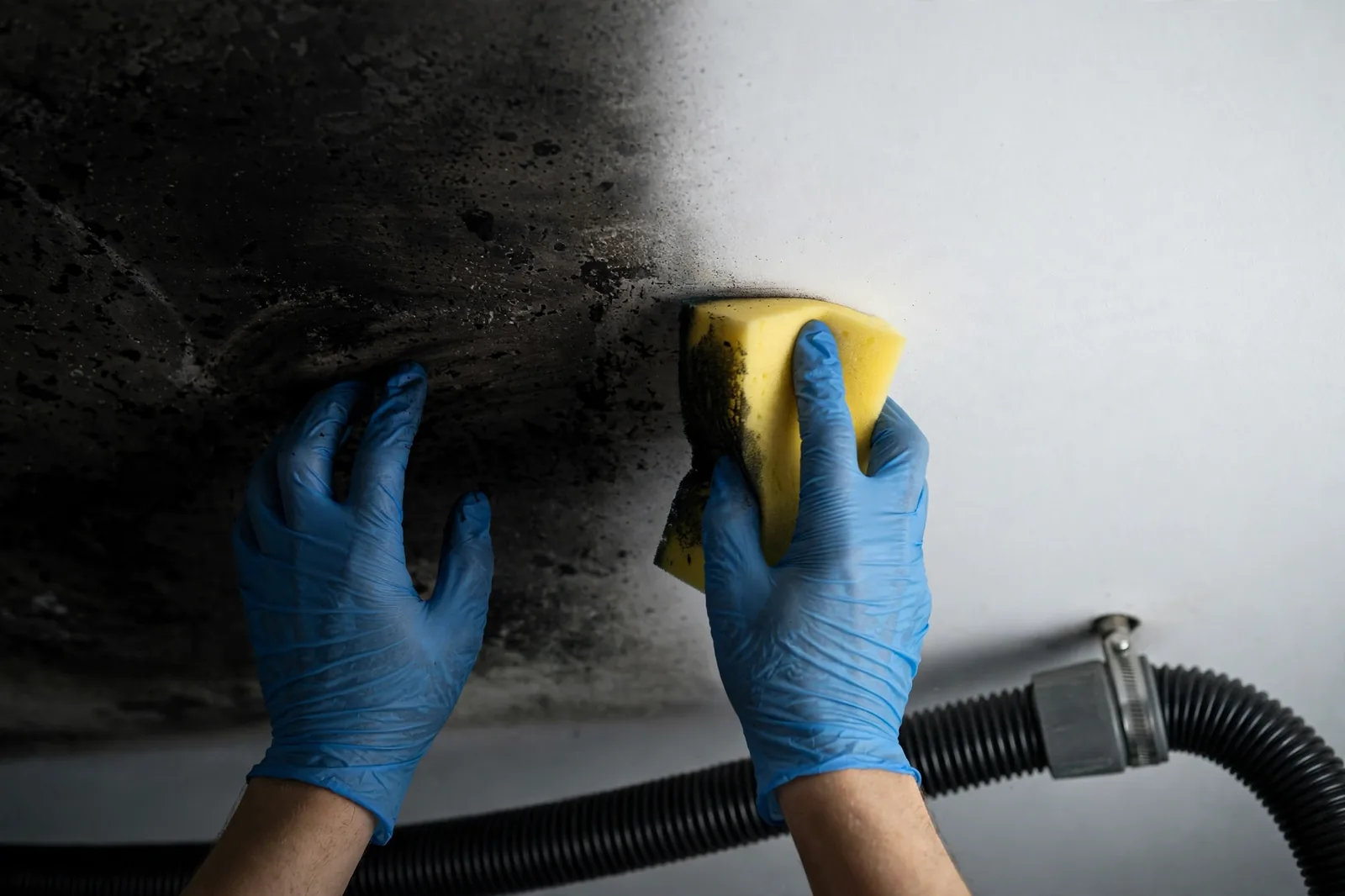
Corrosive soot removal from walls, ceilings, contents, and HVAC-affected areas.
Explore Smoke & Soot Cleanup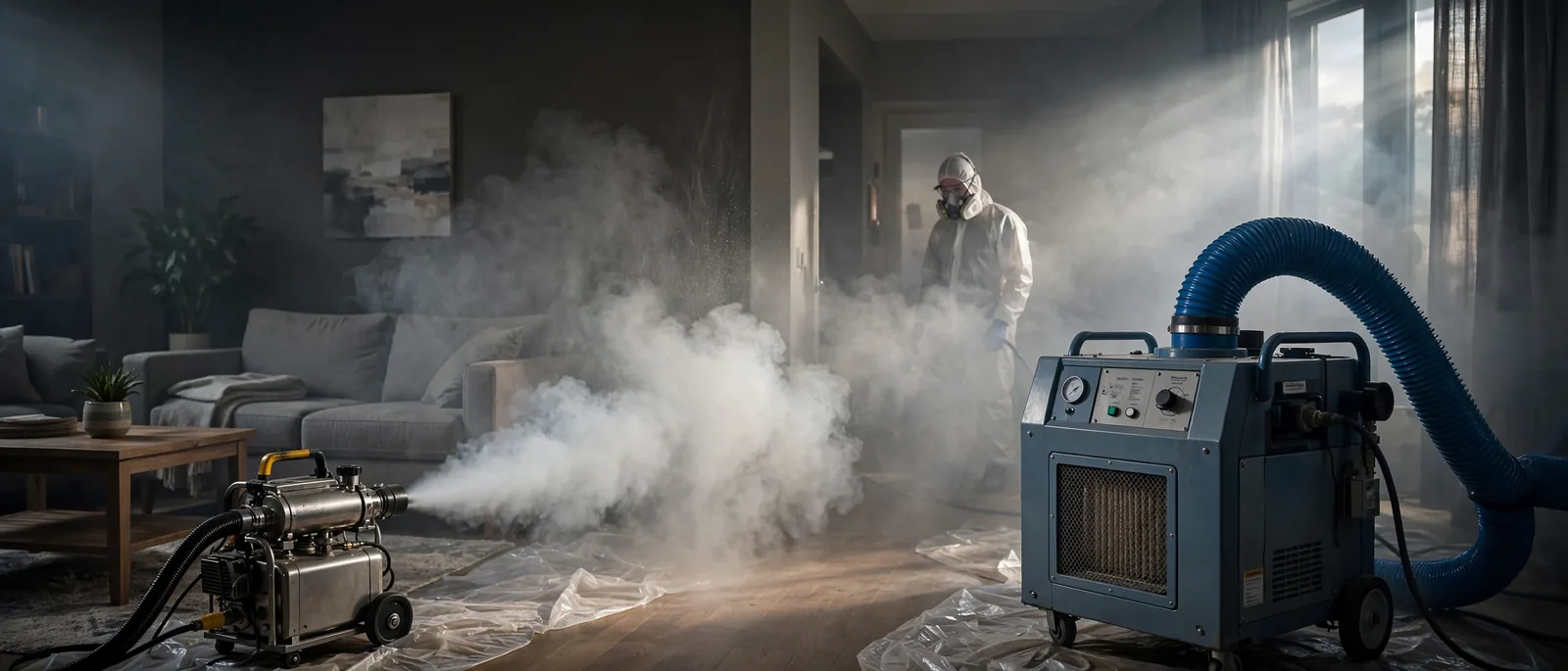
Odor neutralized at the source, thermal fogging, hydroxyl, and deep cleaning.
Explore Smoke Odor Removal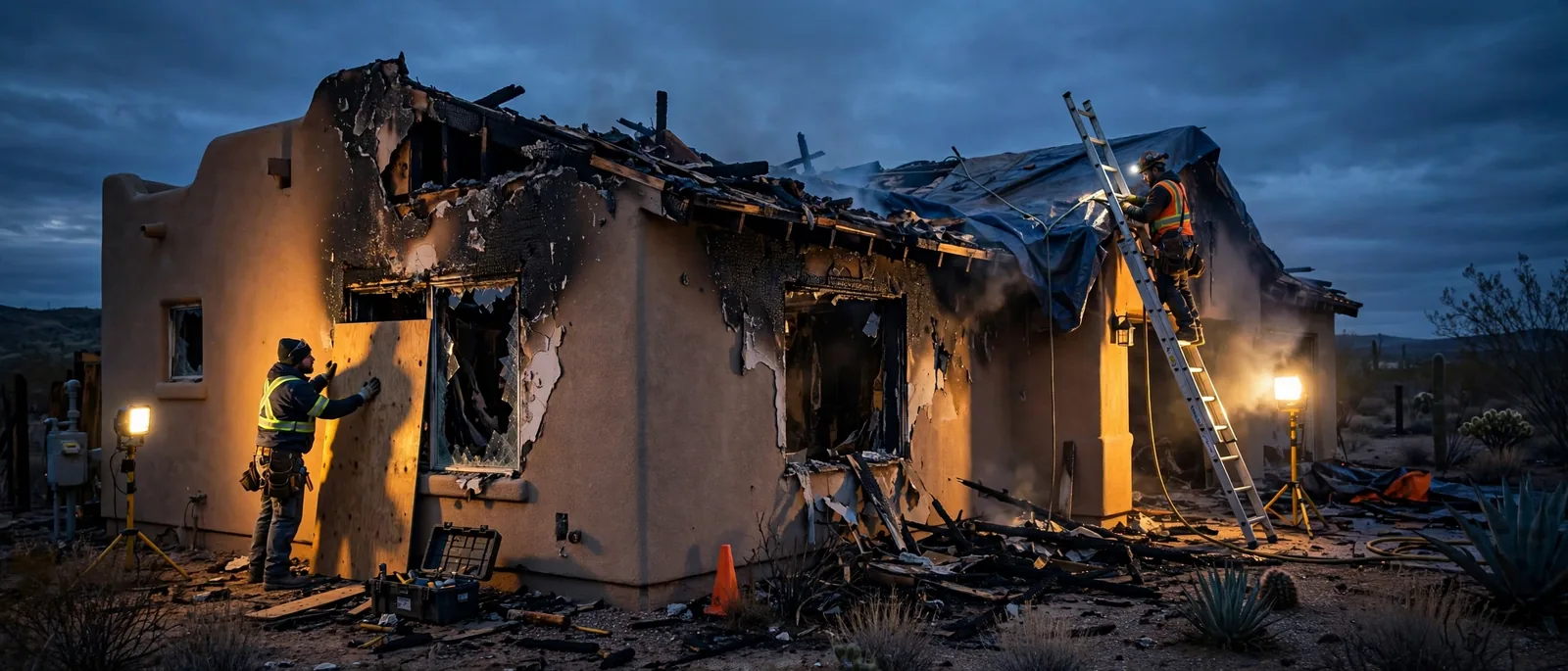
Fast securing of windows, doors, and damaged roofs after fire or storm.
Explore Emergency Board-Up & Tarping
How board-up pricing works in Sahuarita, AZ: what drives the cost and what's included.
Explore Emergency Board-Up Cost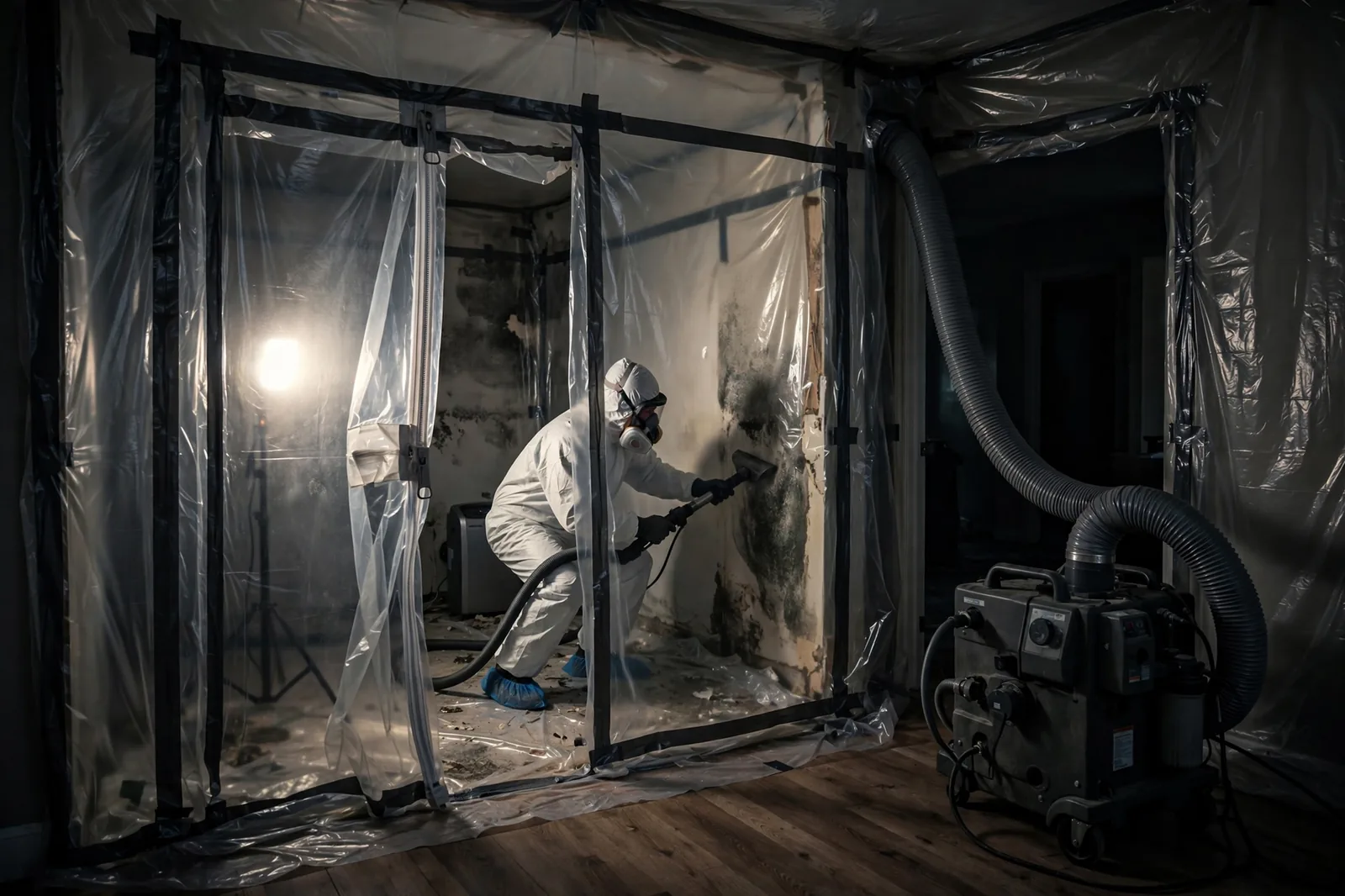
Containment and proper removal of mold after moisture intrusion in Arizona heat.
Explore Mold RemediationWater keeps moving and mold starts within 24-48 hours. Call +1 844-969-2789, our 24/7 line, and we'll extract, dry, and verify.
24/7 emergency line, we answer around the clock.